
Emerging Markets in the FMCG Industry: Opportunities, Trends, and Future Growth
Introduction
The Fast-Moving Consumer Goods (FMCG) industry is one of the largest and most dynamic sectors in the global economy. It includes products that are purchased frequently by consumers, such as food and beverages, personal care items, household products, dairy products, packaged snacks, and health and hygiene products. Over the past decade, emerging markets have become major drivers of growth for the FMCG sector. Countries in Asia, Africa, Latin America, and the Middle East are experiencing rapid urbanization, increasing disposable incomes, and changing consumer lifestyles, creating enormous opportunities for FMCG companies.
Emerging markets are transforming the global FMCG landscape by contributing a significant share of industry revenues and influencing new consumption patterns. These markets are characterized by large populations, growing middle-class consumers, expanding retail infrastructure, and increasing digital connectivity. As a result, multinational corporations and regional players are investing heavily to capture these opportunities.
Understanding Emerging Markets
Emerging markets refer to developing economies that are experiencing rapid industrialization and economic growth. These countries are transitioning from low-income economies to more developed economies. Examples include:
- India
- Bangladesh
- Indonesia
- Vietnam
- Philippines
- Nigeria
- Kenya
- Brazil
- Mexico
- South Africa
- Egypt
These regions are becoming increasingly important for FMCG companies because consumer spending is growing faster than in mature markets like North America and Western Europe.
Importance of Emerging Markets in FMCG
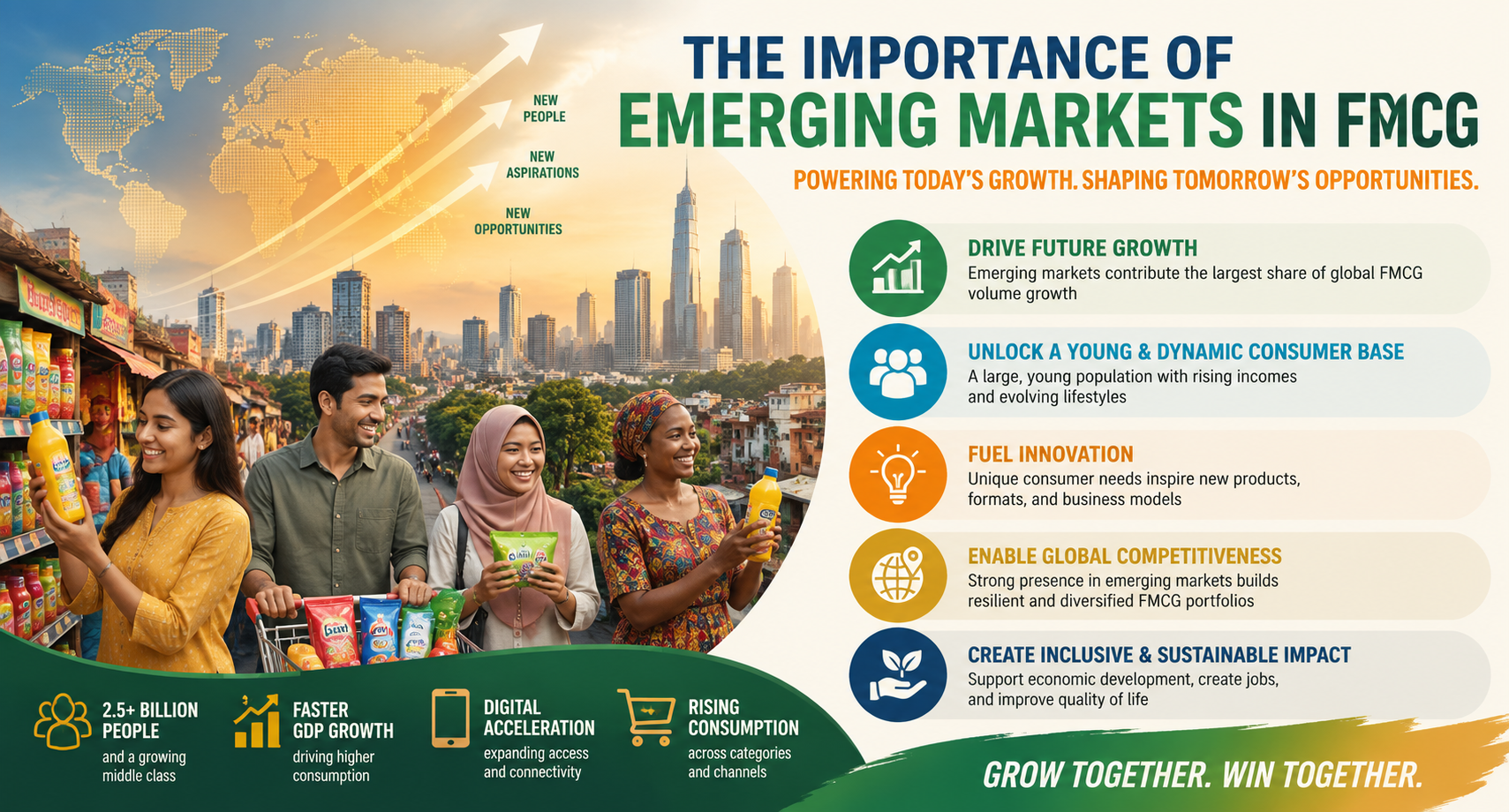
1. Large Population Base
Countries such as India, Indonesia, Nigeria, and Brazil have huge populations. A large consumer base translates into greater demand for everyday products.
For example, India alone has over 1.4 billion people, making it one of the largest markets for food, beverages, cosmetics, and personal care products.
2. Rising Middle-Class Consumers
conomic development has increased disposable income among millions of households. Consumers are willing to spend more on:
- Premium food products
- Packaged snacks
- Organic products
- Personal grooming items
- Health and wellness products
The growing middle class is driving demand for branded and value-added products.
3. Rapid Urbanization
Urbanization is changing consumer behavior. People living in cities prefer:
- Convenient packaging
- Ready-to-eat foods
- Frozen products
- Home care solutions
- Digital shopping experiences
Urban consumers have less time and seek products that save effort and enhance convenience.
3. Digital Transformation
Internet penetration and smartphone usage are increasing rapidly in emerging economies. Consumers now have access to:
- E-commerce platforms
- Online grocery stores
- Mobile payment systems
- Social commerce channels
Digital connectivity is reshaping purchasing patterns and creating new opportunities for FMCG brands.
Key Growth Drivers of Emerging FMCG Markets
Growing Disposable Income
Rising wages and employment opportunities are improving purchasing power. Consumers are shifting from unbranded products to trusted brands offering better quality and safety.
This trend is particularly visible in:
- India
- Vietnam
- Bangladesh
- Indonesia
- Kenya
As income levels rise, spending on health, nutrition, and premium products increases.
Young Population
Emerging markets generally have younger populations compared to developed countries.
Young consumers are:
- Tech-savvy
- Brand-conscious
- Influenced by social media
- More open to experimenting with new products
Generation Z and Millennials are shaping demand across categories such as:
- Snacks
- Energy drinks
- Beauty products
- Skincare
- Functional foods
Expansion of Modern Retail
The growth of supermarkets, hypermarkets, and convenience stores has improved product accessibility.
Modern retail chains provide:
- Better product availability
- Promotional activities
- Premium product visibility
- Improved customer experience
In addition, e-commerce platforms are complementing traditional retail channels.
Increasing Awareness of Health and Hygiene
The COVID-19 pandemic significantly changed consumer priorities.
Demand increased for:
- Hand sanitizers
- Disinfectants
- Immunity-boosting foods
- Nutritional supplements
- Herbal products
- Organic foods
Consumers are becoming increasingly health-conscious, creating opportunities for FMCG companies focused on wellness.
Major Trends Shaping Emerging FMCG Markets
Premiumization
Consumers are moving beyond basic products and seeking premium experiences.
Examples include:
- Gourmet snacks
- Premium tea and coffee
- Natural skincare products
- High-quality packaged foods
- Functional beverages
Consumers are willing to pay higher prices for quality, convenience, and brand trust.
Sustainability and Eco-Friendly Products
Environmental awareness is increasing among consumers.
Brands are investing in:
- Recyclable packaging
- Sustainable sourcing
- Reduced plastic usage
- Carbon-neutral operations
- Green manufacturing processes
Sustainability is becoming a competitive advantage in emerging markets.
Rise of E-Commerce
Online retail has revolutionized FMCG distribution.
Popular channels include:
- Amazon
- Flipkart
- Shopee
- Lazada
- BigBasket
- Blinkit
- Zepto
Benefits of digital commerce include:
- Faster delivery
- Wider product selection
- Convenience
- Personalized recommendations
Quick commerce and same-day delivery are becoming increasingly important.
Localized Products
Consumers prefer products that align with local tastes and cultural preferences.
Companies are introducing:
- Region-specific flavors
- Affordable pack sizes
- Local ingredients
- Traditional recipes
Localization helps brands build stronger emotional connections with consumers.
Data-Driven Marketing
Artificial Intelligence and analytics are transforming consumer engagement.
Companies use data to:
- Understand buying behavior
- Predict demand
- Personalize promotions
- Improve inventory management
- Optimize pricing strategies
AI-driven insights are becoming critical for growth.
Challenges in Emerging FMCG Markets
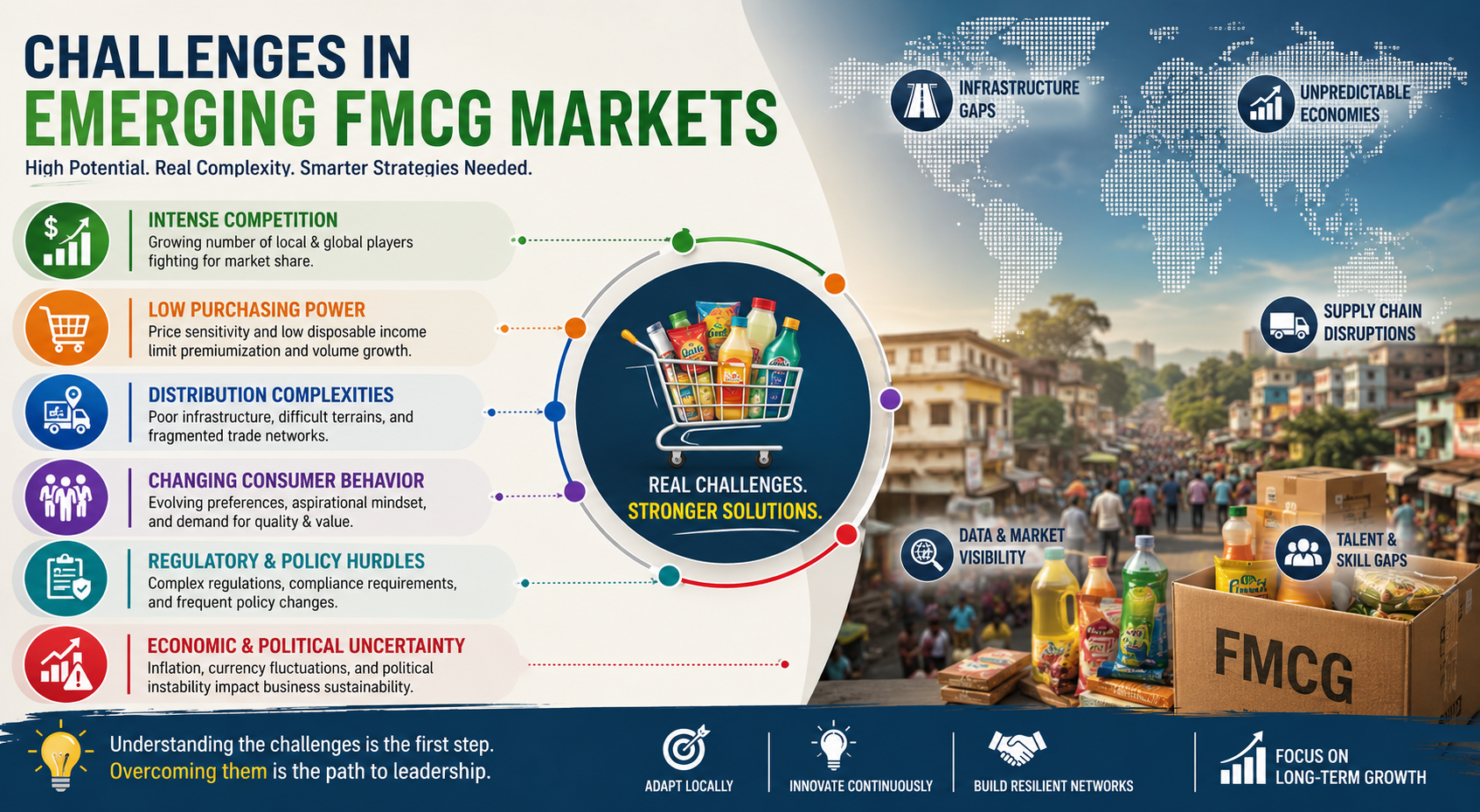
Price Sensitivity
Many consumers remain highly price-conscious. Small price increases can influence purchasing decisions.
To address this challenge, companies offer:
- Low-cost packaging
- Sachet products
- Value packs
- Promotional discounts
Supply Chain Complexity
Poor infrastructure and transportation networks can increase logistics costs.
Challenges include:
- Warehousing limitations
- Delivery delays
- Inventory shortages
- High transportation costs
Efficient supply chain management is crucial for success.
Intense Competition
Emerging markets are highly competitive due to the presence of:
- Global corporations
- Regional brands
- Local manufacturers
- Private labels
Companies must continuously innovate to maintain market share.
Regulatory Environment
Government regulations vary from country to country.
Companies must comply with:
- Food safety standards
- Labeling requirements
- Tax regulations
- Import restrictions
- Environmental policies
Regulatory compliance is essential to avoid operational disruptions.
Technology Transforming the FMCG Industry
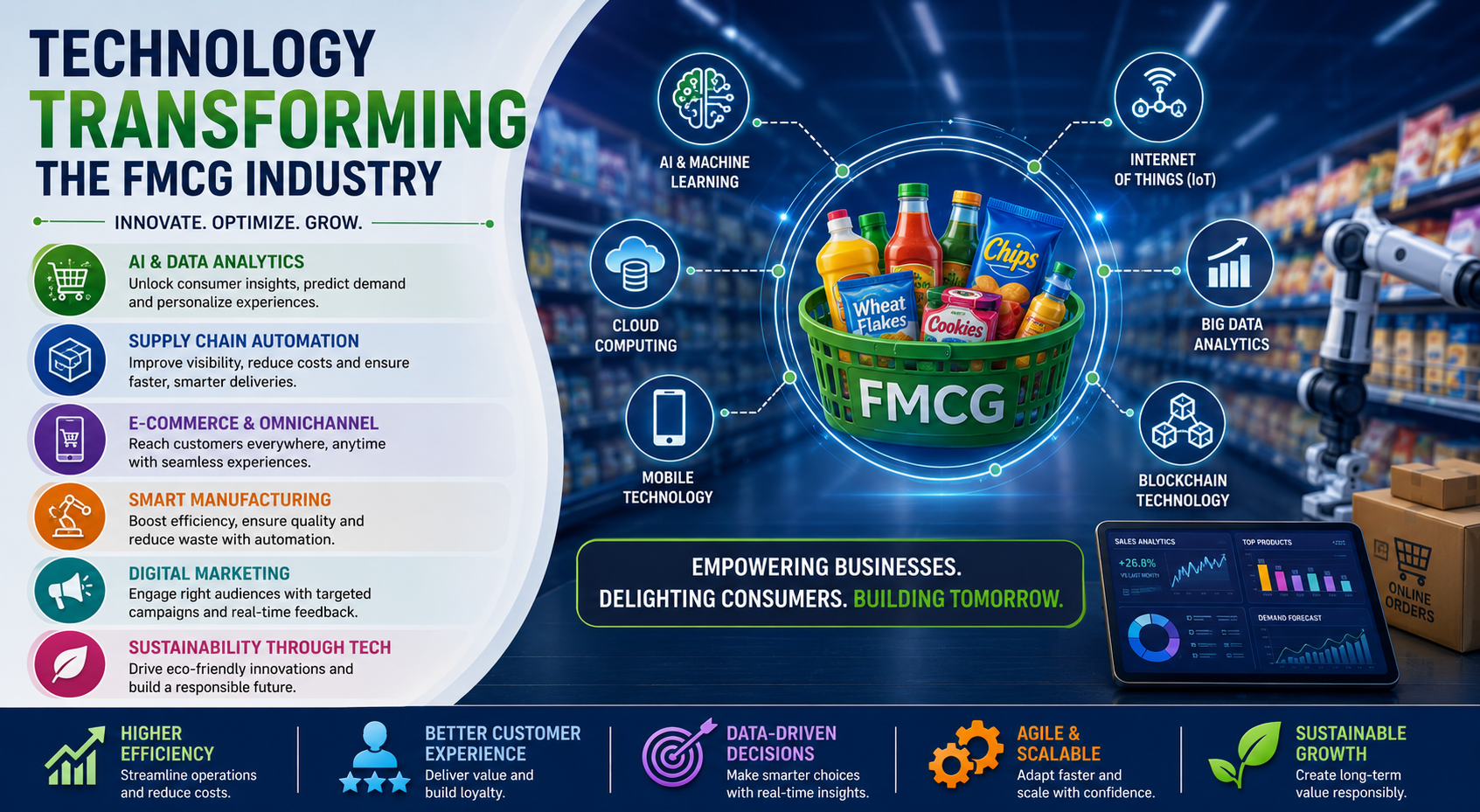
Artificial Intelligence
AI enables:
- Demand forecasting
- Customer segmentation
- Inventory optimization
- Personalized marketing
Companies are increasingly using AI to improve efficiency and customer satisfaction.
Automation
Automation improves manufacturing productivity and reduces operational costs.
Benefits include:
- Faster production
- Reduced errors
- Better quality control
- Higher efficiency
Internet of Things (IoT)
IoT devices help companies monitor:
- Inventory levels
- Warehouse conditions
- Supply chain performance
- Product quality
Real-time monitoring improves decision-making and operational effectiveness.
Blockchain Technology
Blockchain enhances:
- Product traceability
- Food safety
- Supply chain transparency
Consumers increasingly value transparency and authenticity.
Emerging Categories in FMCG
Health and Wellness Products
Consumers are seeking:
- Protein-rich foods
- Functional beverages
- Vitamin supplements
- Organic products
Plant-Based Foods
Demand for sustainable and healthy diets is increasing.
Popular products include:
- Plant-based milk
- Vegan snacks
- Meat alternatives
Beauty and Personal Care
The beauty industry is growing rapidly in emerging economies.
Popular segments include:
- Skincare
- Haircare
- Men’s grooming
- Natural cosmetics
Ready-to-Eat Foods
Busy lifestyles are driving demand for convenience.
Consumers prefer:
- Instant noodles
- Frozen meals
- Packaged snacks
- Ready-to-cook products
Opportunities for FMCG Companies
Rural Market Expansion
Rural populations represent untapped potential. Improved infrastructure and digital connectivity are opening new markets.
Affordable Innovation
Companies can introduce:
- Small pack sizes
- Budget-friendly products
- Localized offerings
Omnichannel Distribution
Combining offline and online channels provides greater consumer reach.
Strategic Partnerships
Collaborating with:
- Local distributors
- Retail chains
- Technology companies
can accelerate market penetration.
Sustainable Business Models
Consumers increasingly support brands committed to environmental responsibility.
Future Outlook of Emerging Markets in FMCG
The future of the FMCG industry in emerging markets is extremely promising. Rising incomes, digital adoption, urbanization, and changing consumer preferences will continue to drive growth.
Key trends expected to shape the next decade include:
- Artificial Intelligence and automation.
- Personalized consumer experiences.
- Sustainability-driven innovations.
- Health and wellness-focused products.
- Expansion of quick commerce.
- Increased use of data analytics.
- Premiumization across product categories.
- Stronger omnichannel retail ecosystems.
- Smart supply chain management.
- Greater demand for locally inspired products.
Companies that embrace innovation, understand local consumer preferences, and adopt sustainable business practices will be best positioned to succeed.
Conclusion
Emerging markets have become the engine of growth for the global FMCG industry. Their expanding populations, rising incomes, digital transformation, and evolving consumer lifestyles provide immense opportunities for both multinational corporations and local players. While challenges such as price sensitivity, infrastructure limitations, and regulatory complexities remain, the long-term prospects are highly favourable.
As technology continues to reshape consumer behaviour and supply chains, FMCG companies must focus on innovation, localization, sustainability, and digital transformation to remain competitive. Organizations that successfully adapt to these changing market dynamics will play a leading role in shaping the future of the FMCG industry and unlocking substantial growth opportunities across emerging economies.