
Driving Sustainable Growth in the FMCG Industry
Accelerating Growth in the Fast-Moving Consumer Goods Industry
The Fast-Moving Consumer Goods (FMCG) industry is one of the most competitive and dynamic sectors in the global economy. Companies operating in this segment deal with products that are purchased frequently, consumed rapidly, and require efficient supply chains to maintain market presence. As consumer expectations continue to evolve, businesses must adopt innovative strategies to sustain profitability, strengthen brand loyalty, and achieve long-term growth.
A well-defined FMCG growth strategy focuses on increasing market share, improving distribution efficiency, enhancing customer engagement, and leveraging technology to respond to changing market demands. Companies that successfully implement these strategies are better positioned to outperform competitors and create sustainable value.
Understanding FMCG Growth
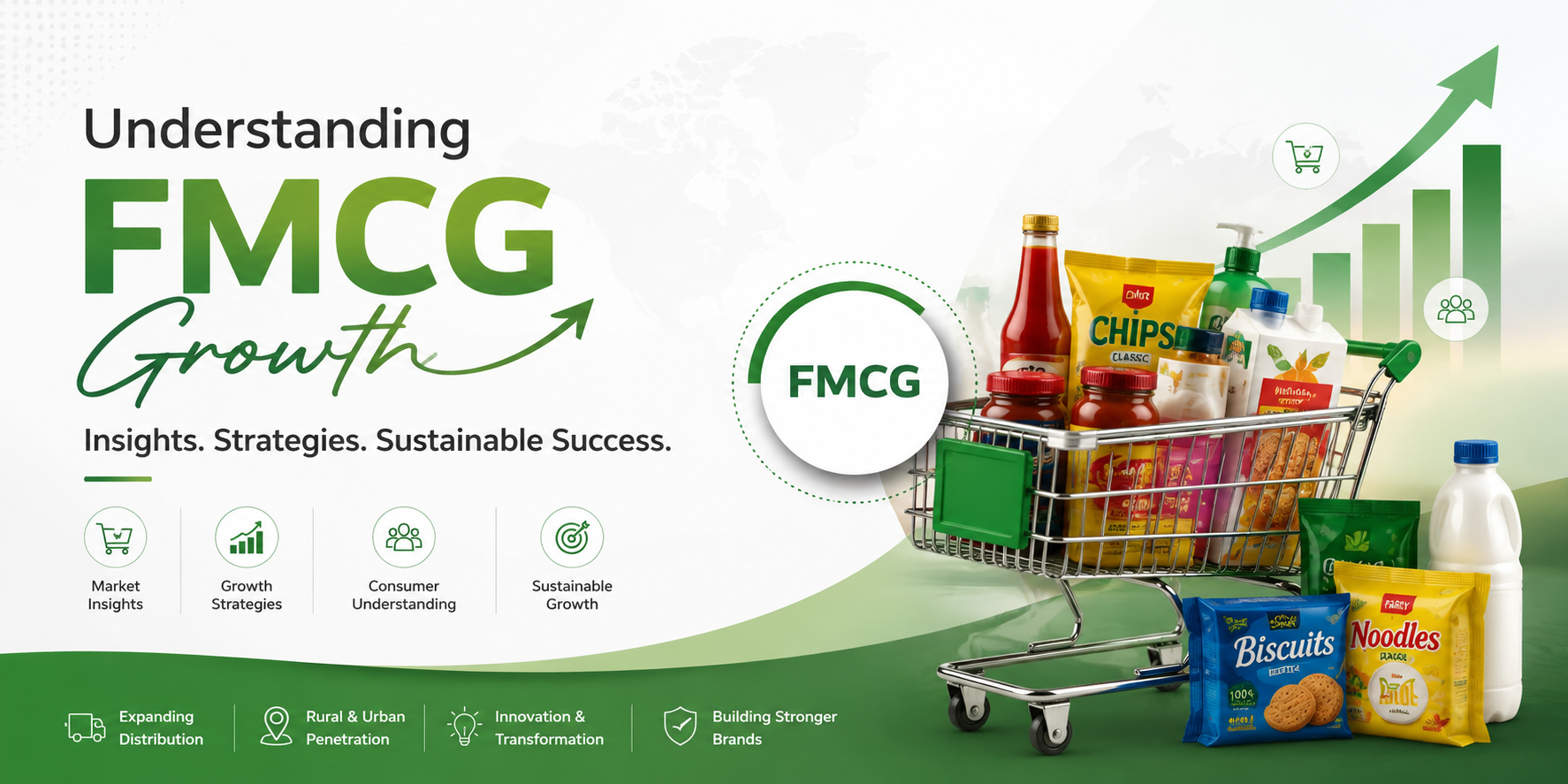
Growth in the FMCG sector is not solely about increasing sales volumes. It involves creating a strong ecosystem that combines product innovation, customer satisfaction, operational excellence, and market expansion. Sustainable growth requires businesses to understand consumer behaviour, adapt to market trends, and continuously optimize their route-to-market strategies.
Successful FMCG organizations prioritize:
- Customer-centric approaches
- Strong distribution networks
- Digital transformation
- Product innovation
- Data-driven decision-making
- Efficient supply chain management
- Brand building and consumer engagement
These pillars collectively drive profitability and create competitive advantages in rapidly evolving markets.
Key Drivers of FMCG Growth
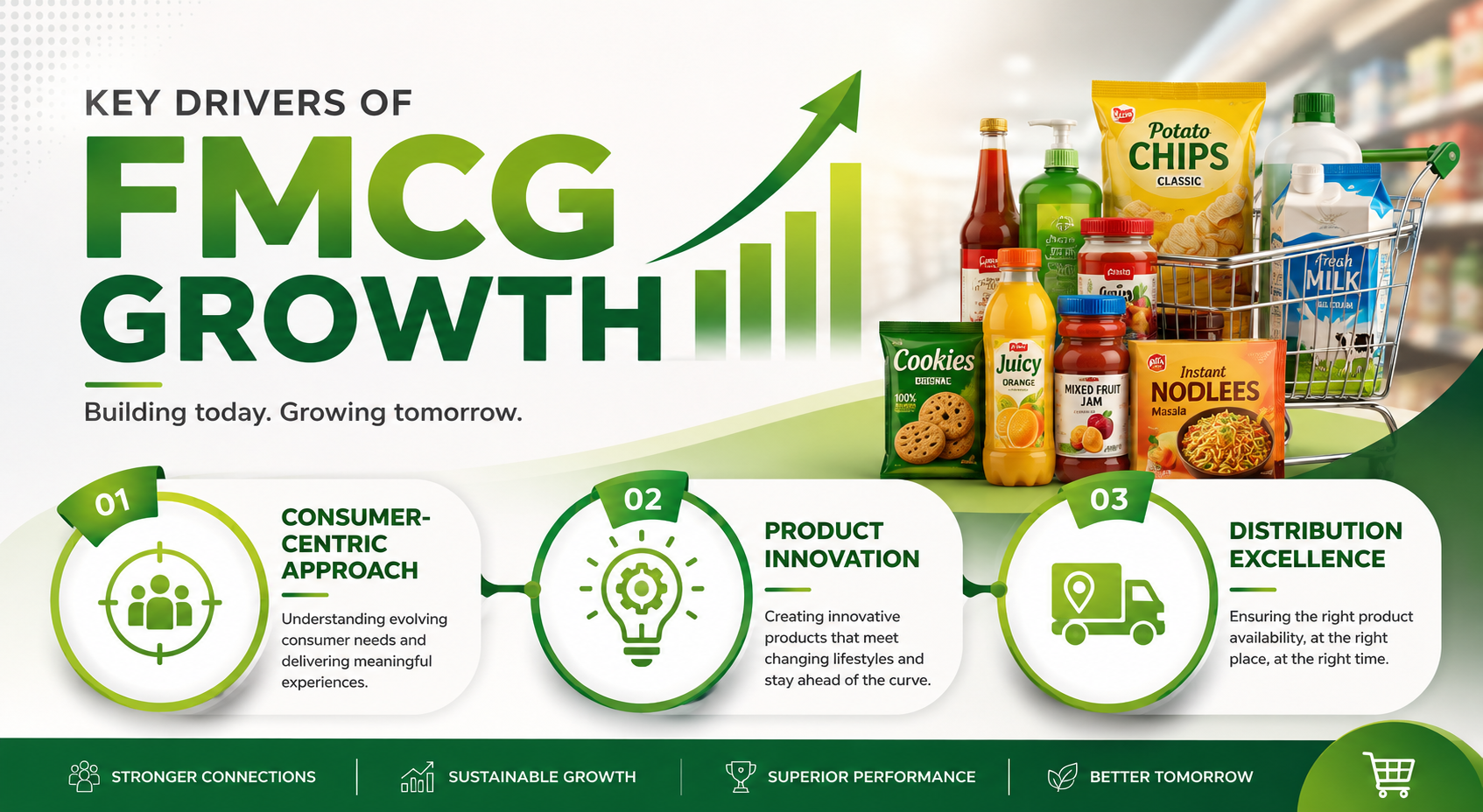
1. Consumer-Centric Approach
Modern consumers demand convenience, quality, affordability, and personalization. Understanding customer preferences and purchasing patterns enables companies to create products and experiences that meet evolving expectations.
Businesses should:
- Conduct regular market research.
- Analyze customer buying behaviour.
- Monitor changing consumption trends.
- Offer value-driven products.
- Build strong customer relationships.
By focusing on consumer needs, brands can strengthen loyalty and increase repeat purchases.
2. Product Innovation
Innovation is one of the most powerful engines of growth in the FMCG industry. Consumers are constantly seeking new products, improved formulations, and enhanced experiences.
Product innovation may include:
- Health-focused offerings.
- Sustainable packaging.
- Premium product lines.
- New flavors and variants.
- Functional and convenience-based products.
Continuous innovation allows brands to differentiate themselves and maintain relevance in competitive markets.
3. Distribution Excellence
An efficient distribution network is essential for maximizing product availability and ensuring customer satisfaction.
Key components of distribution excellence include:
Wider Market Coverage
Expanding reach into urban, semi-urban, and rural markets enables companies to access new customer segments and increase sales opportunities.
Efficient Logistics
Optimized warehousing, transportation, and inventory management reduce operational costs and improve delivery performance.
Channel Optimization
Businesses should maintain strong relationships with:
- Wholesalers
- Retailers
- Modern trade partners
- E-commerce platforms
- Distributors
A balanced channel strategy enhances market penetration and improves service levels.
Real-Time Visibility
Digital tools provide visibility into inventory levels, sales performance, and demand fluctuations, enabling faster and more accurate decisions.
Route-to-Market Transformation
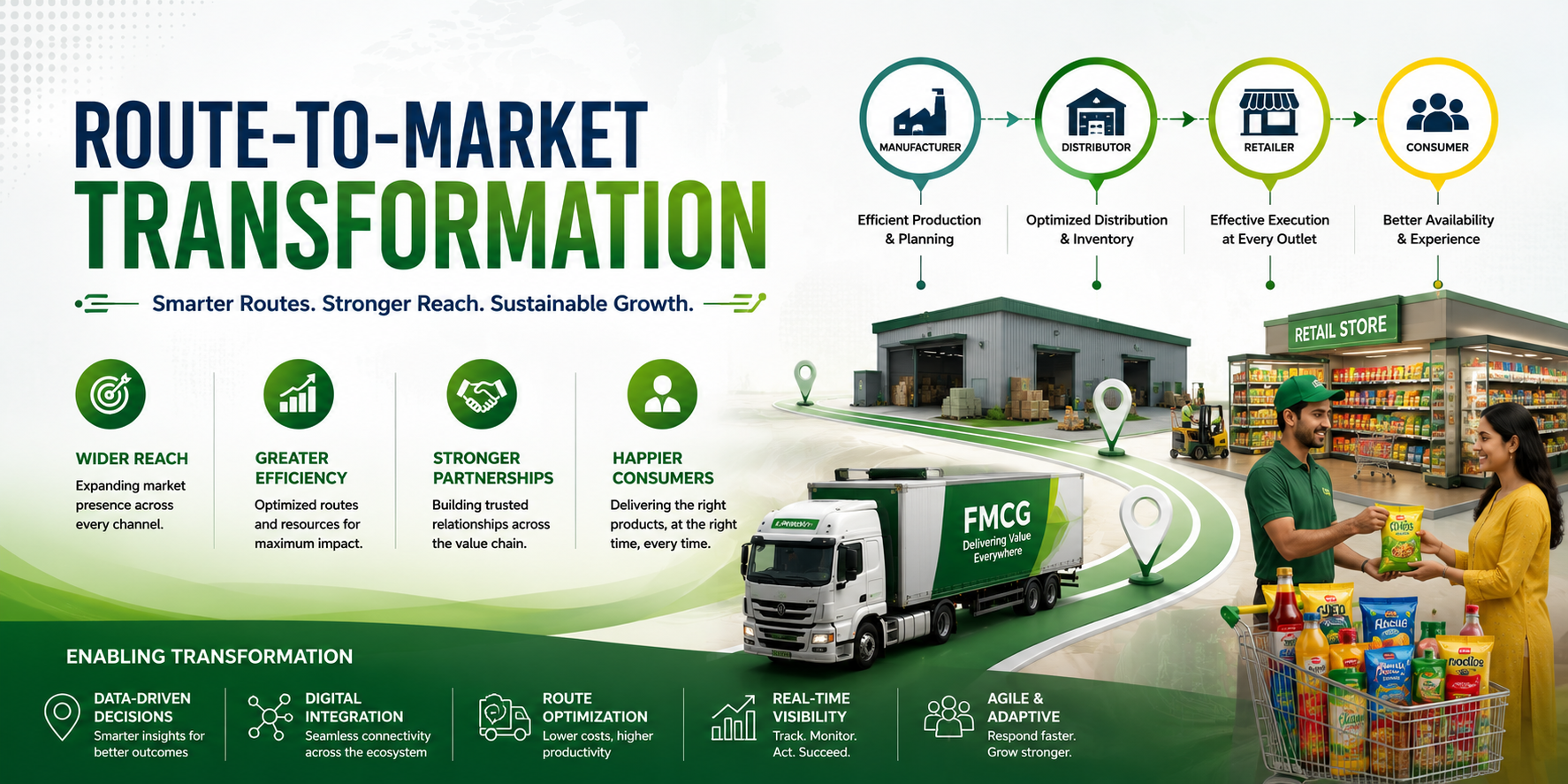
The route-to-market (RTM) strategy determines how products reach end consumers. A well-designed RTM framework increases efficiency and enhances customer experience.
Important elements include:
Segmentation
Different markets require different approaches. Segmenting customers based on geography, demographics, and buying patterns helps optimize distribution and promotional efforts.
Channel Diversification
Companies should combine multiple channels, including:
- Traditional retail
- Modern trade
- E-commerce
- Quick commerce
- Direct-to-consumer platforms
Diversification reduces dependency on a single channel and creates new growth opportunities.
Sales Force Effectiveness
Equipping sales teams with digital tools and analytics improves productivity, territory management, and customer engagement.
Data-Based Planning
Predictive analytics and market intelligence help companies anticipate demand and allocate resources efficiently.
Brand Building and Marketing Excellence
Strong brands enjoy higher consumer trust and long-term loyalty. Effective marketing strategies help companies create awareness, influence purchase decisions, and strengthen emotional connections with customers.
Digital Marketing
Digital channels have transformed consumer engagement. Brands increasingly leverage:
- Social media marketing
- Influencer collaborations
- Content marketing
- Search engine optimization
- Online advertising
These approaches enable businesses to reach wider audiences and improve brand visibility.
Consumer Promotions
Strategic promotions encourage trial and repeat purchases. Common promotional activities include:
- Discounts
- Bundling
- Loyalty programs
- Cash back offers
- Seasonal campaigns
Customer Experience
Delivering consistent quality and excellent customer service builds trust and strengthens brand equity.
Leveraging Technology and Artificial Intelligence
Technology is reshaping the FMCG landscape. Artificial Intelligence (AI), machine learning, and automation are helping companies make smarter decisions and improve operational efficiency.
Demand Forecasting
AI-powered forecasting models predict demand patterns more accurately, reducing stock-outs and minimizing excess inventory.
Supply Chain Optimization
Advanced analytics improve procurement, warehousing, and transportation efficiency.
Customer Insights
Data analytics provide deeper understanding of consumer behavior, enabling personalized marketing and targeted campaigns.
Automation
Automation enhances productivity and reduces operational costs across manufacturing and distribution processes.
Smart Retail Execution
Mobile applications and digital platforms allow sales representatives to monitor store performance, track inventory, and improve retail execution.
Emerging Markets as Growth Opportunities
Emerging markets represent significant opportunities for FMCG companies due to increasing urbanization, rising disposable incomes, and changing lifestyles.
Rural Expansion
Rural markets are becoming major contributors to FMCG growth. Businesses can strengthen their presence by:
- Expanding distribution networks.
- Offering affordable packaging formats.
- Creating localized marketing campaigns.
- Building partnerships with local retailers.
Premiumization
As consumer purchasing power increases, demand for premium products continues to rise. Companies can capitalize on this trend by introducing high-value offerings and differentiated product portfolios.
Sustainability as a Competitive Advantage
Consumers increasingly prefer brands that demonstrate social and environmental responsibility.
Sustainable growth initiatives include:
Eco-Friendly Packaging
Reducing plastic usage and adopting recyclable materials contribute to environmental protection and improve brand reputation.
Responsible Sourcing
Ethical sourcing practices enhance supply chain resilience and strengthen stakeholder trust.
Energy Efficiency
Investing in sustainable manufacturing processes reduces operational costs and environmental impact.
Waste Reduction
Optimizing production and minimizing waste support both profitability and sustainability objectives.
Companies that embrace sustainability are more likely to gain consumer trust and maintain long-term competitiveness.
Data-Driven Decision Making
Modern FMCG companies rely heavily on data analytics to guide strategic decisions.
Key areas include:
- Sales performance analysis.
- Market trend identification.
- Consumer behaviour insights.
- Inventory optimization.
- Pricing strategy development.
- Promotional effectiveness measurement.
Data-driven organizations are better equipped to respond to market changes and capitalize on emerging opportunities.
Building Strong Partnerships
Collaboration across the value chain is essential for sustainable growth.
Strong partnerships with:
- Suppliers
- Distributors
- Retailers
- Technology providers
- Logistics partners
Enable businesses to improve operational efficiency and deliver superior customer experiences.
Collaborative relationships foster innovation, enhance market responsiveness, and strengthen competitive positioning.
Challenges Facing the FMCG Industry
Despite significant growth opportunities, FMCG companies face several challenges:
- Rising raw material costs.
- Intense competition.
- Changing consumer preferences.
- Supply chain disruptions.
- Regulatory requirements.
- Inflationary pressures.
- Digital disruption.
Organizations that proactively address these challenges through agility, innovation, and operational excellence are more likely to achieve sustainable growth.
Future Outlook
The future of the FMCG industry will be shaped by digital transformation, artificial intelligence, sustainability, and changing consumer lifestyles. Companies that invest in innovation, strengthen distribution networks, embrace technology, and maintain a customer-first mindset will be best positioned to succeed.
Growth in the FMCG sector requires a balanced approach that combines operational excellence with strategic agility. By leveraging data, optimizing route-to-market capabilities, enhancing consumer engagement, and pursuing sustainable practices, businesses can unlock new opportunities and create lasting value.
Conclusion
FMCG growth is driven by a combination of innovation, distribution excellence, customer-centricity, digital transformation, and sustainable business practices. In an increasingly competitive marketplace, organizations must continuously evolve to meet changing consumer expectations and capitalize on emerging trends.
A comprehensive growth strategy empowers FMCG companies to strengthen their brands, expand market presence, improve profitability, and achieve long-term success. Businesses that embrace technology, optimize operations, and remain focused on delivering value to consumers will continue to thrive in the ever-changing FMCG landscape.